Company & Culture
Author:
Anne Walz

Author:
When Indesign was founded, the company grew by hiring experienced professionals from the networks of its founders. It worked, but by 2005, the organization faced a decision: continue relying on existing connections, or invest in building a systematic approach to sourcing and developing early-career talent.
The founders chose the harder path.
In 2005 and 2006, Indesign made a strategic shift toward recruiting directly from universities. The vision was sound: identify talented students early, build relationships with them, and bring them into the company to grow as engineers and leaders. The reality was more complicated.
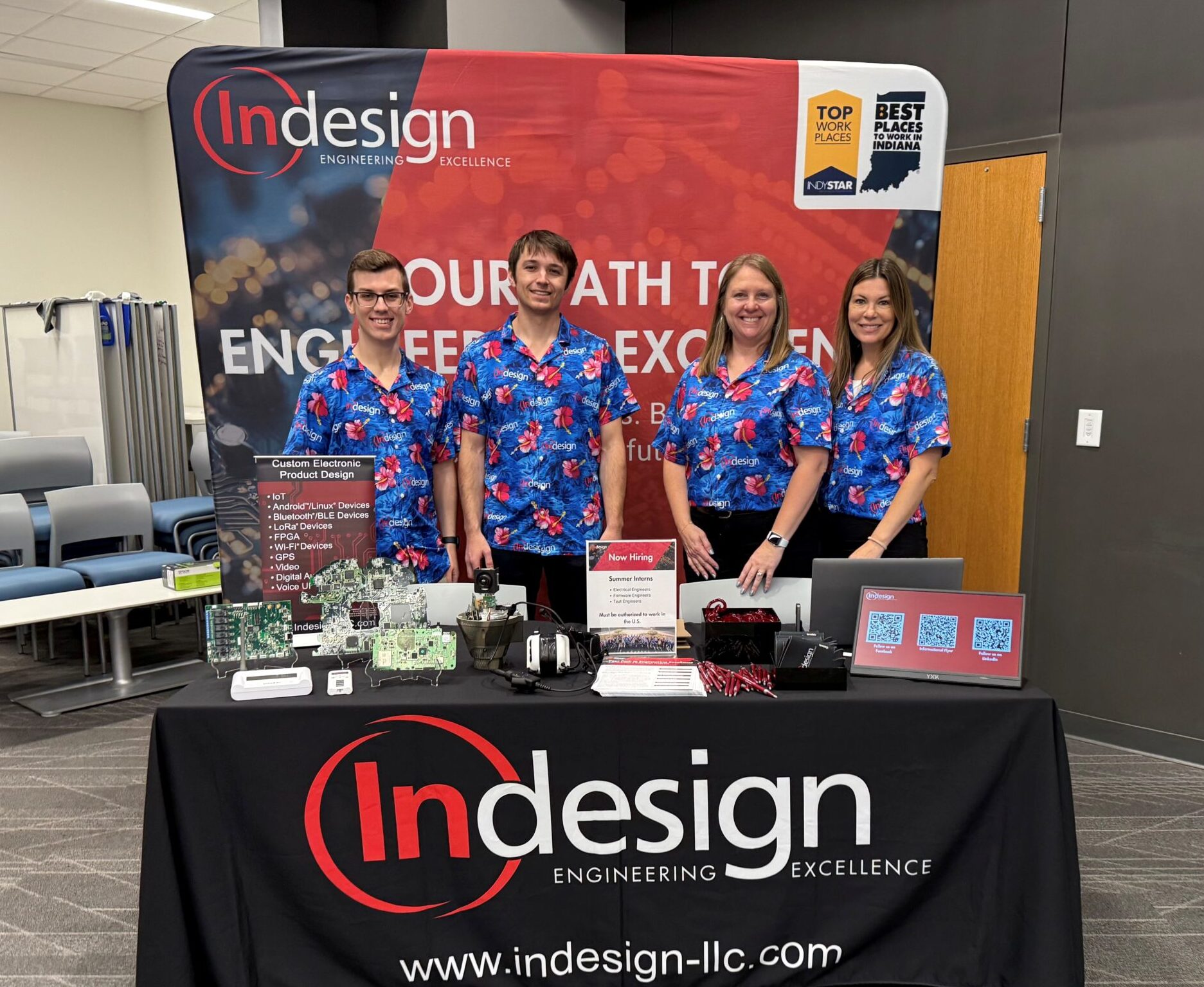
Competing against large employers with established campus presences meant Indesign had to be present, visible, and consistent. The company committed to attending job fairs…lots of them. What seemed straightforward in theory became a practical education in resilience.
Early career fairs taught the Indesign team several hard lessons. The indoor events were hot, and the outdoor events were hotter. The wind blew over our displays, and the sun melted chocolate bar giveaways, attracting swarms of bees. The company learned that the best giveaways attract attention, but not the right kind of attention.
But the biggest issue by far was competition. At large fairs filled with household names, Indesign’s table could feel invisible. Students lined up around the block to speak with well-known companies, while our team waited two hours for their first conversation. Finding qualified electrical and computer engineering candidates among thousands of students felt like looking for a needle in a haystack.

The breakthrough came through relationships, not logistics. Indesign built partnerships with specific universities. The company invested in sustained presence and meaningful engagement with career services offices and academic departments. This approach led to finding more targeted opportunities to connect with students.
Most importantly, Indesign brought its own engineers to help support the recruiting process. College hires returned to their alma maters and became ambassadors. They spoke directly with candidates, assessed fit, and shared genuine perspective on what it meant to work at Indesign.
This collaborative approach transformed outcomes. Rather than hoping to find qualified candidates among thousands, Indesign began attracting them directly. The company built a reputation as an employer of choice. Candidates started coming to us.
Hiring someone was only half the challenge. The real work happened on day one and beyond. Early onboarding was informal. New hires showed up and figured things out. One early college hire’s first day reflected that reality: minimal instructions, no clear expectations, and a lot of improvisation.
Over time, Indesign built a systematic approach to onboarding and integration. New hires now receive detailed instructions and expectations before their first day. Check-ins happen between hiring and when the employee actually starts. We spotlight new team members so the entire company gets to know them. We partner with Techpoint’s X-tern program to provide housing and a robust outside-of-work experience for summer interns, enhancing the internship and giving us a better sense of fit before making full-time offers.
The infrastructure now includes mentor and coaching checklists for consistency, a comprehensive company training program, new hire lunches to build cross-functional connections, and details like professional headshots and favorite snacks waiting on their desk. It’s not luxury; it’s clarity. New hires know they matter.
Today, 46% of Indesign’s current workforce were hired directly from universities. Thirty-four percent of those college hires started as interns with the company. Turnover is low; tenure of 10 to 20+ years is common.
But the most meaningful metric is trajectory. College hires have grown into senior and principal engineers, business development roles, project management positions, and coaching and management team roles. The people in the room today making strategic decisions were often the interns and entry-level hires years ago. This pipeline isn’t theoretical. It’s real.
Investing in early-career talent requires patience. You won’t see immediate returns. Indesign committed to college recruiting when it would have been easier to hire only experienced people. The company attended job fairs in all the elements, refined its approach through repeated learning, and built onboarding infrastructure that many companies skip.
Thirty years in, the decision is validated. Growing your own talent builds a sustainable pipeline. It strengthens culture because the people advancing into leadership understand Indesign’s values. They grew up here. Retention improves because investment in early-career development signals that the company believes in people. And the company benefits from continuity: leaders who understand the history, the why, and the long-term vision.
The future leaders of Indesign are likely already in the organization, many having started as interns or recent graduates. That isn’t luck. It is a 20-year commitment to a single idea: that the best way to build a company is to invest in people early and help them grow.